
We get judged on what survives contact with production, not on what the prototype could do.
Six things clients ask us to prove before a build starts. Every figure below is already carrying load in something we have shipped, and links to the write-up it came from.
Ship on a real calendar
Phase-gated and verified as it went. The pipeline everyone worried about shipped in week one of five, which is why the last two weeks were polish instead of panic.
14agents across six layers, one orchestratorFleets that hold together
One agent is a demo. Fourteen that hand work to each other without drifting is an architecture, and that is the part that takes the time.
121quality rules between draft and publishAutonomy you can leave alone
An unattended system is defined by how it fails. Most of that build went into the checks that stop a bad run from ever reaching a reader.
96%of listings ruled out before a human lookedNoise cut, reasoning kept
Filtering is easy. Filtering with a written reason attached to every call is what makes the output something a person will actually act on.
667commits across five months, all traceableAI as engineering capacity
Every AI-produced change arrived with a specific file, a specific line and a stated reason. Nothing was accepted on confidence alone, which is why the result can be audited.
70%less manual ops work after launchOps work that actually clears
The measurable win is throughput. Work that used to queue for a person clears in minutes, without a drop in quality.
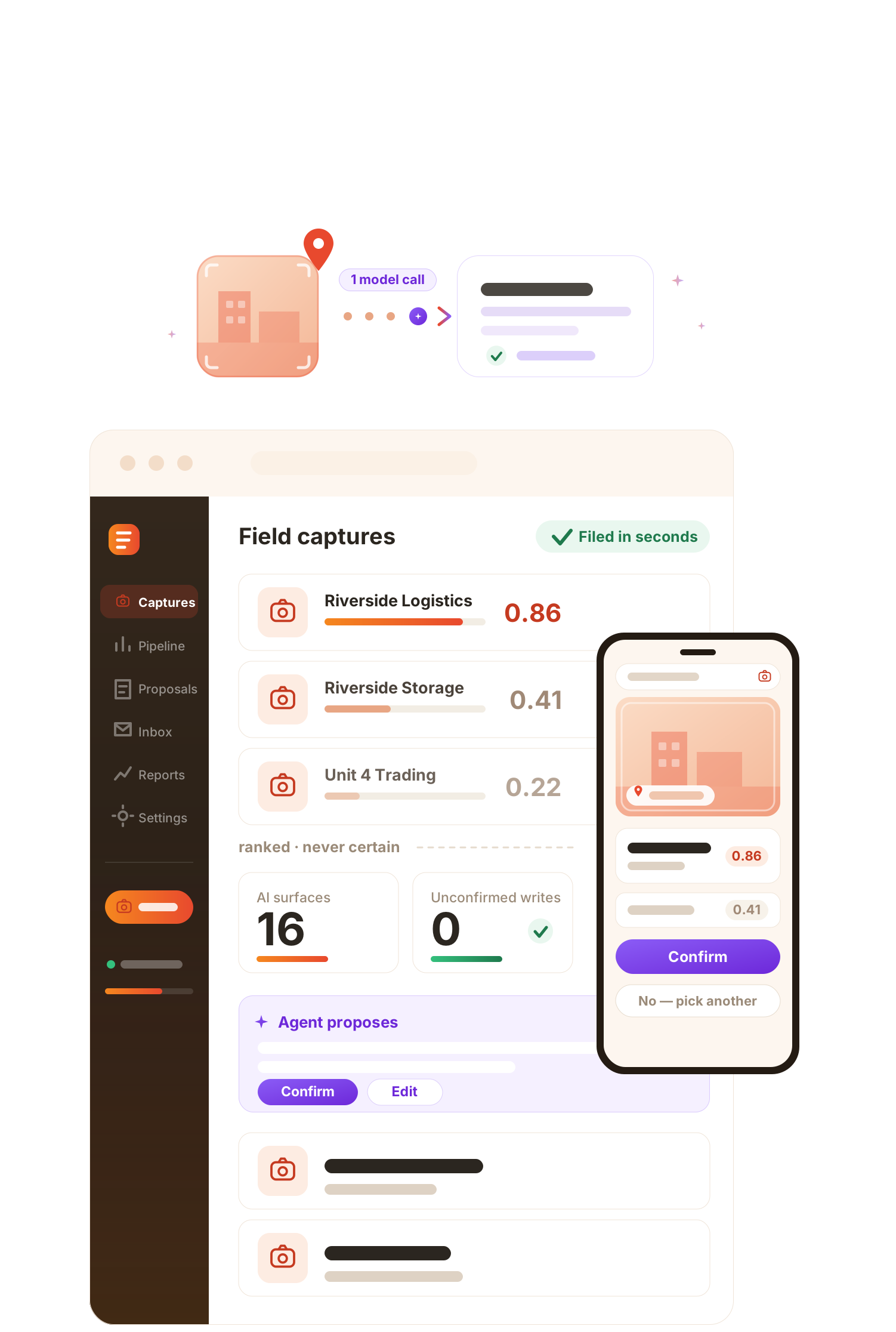
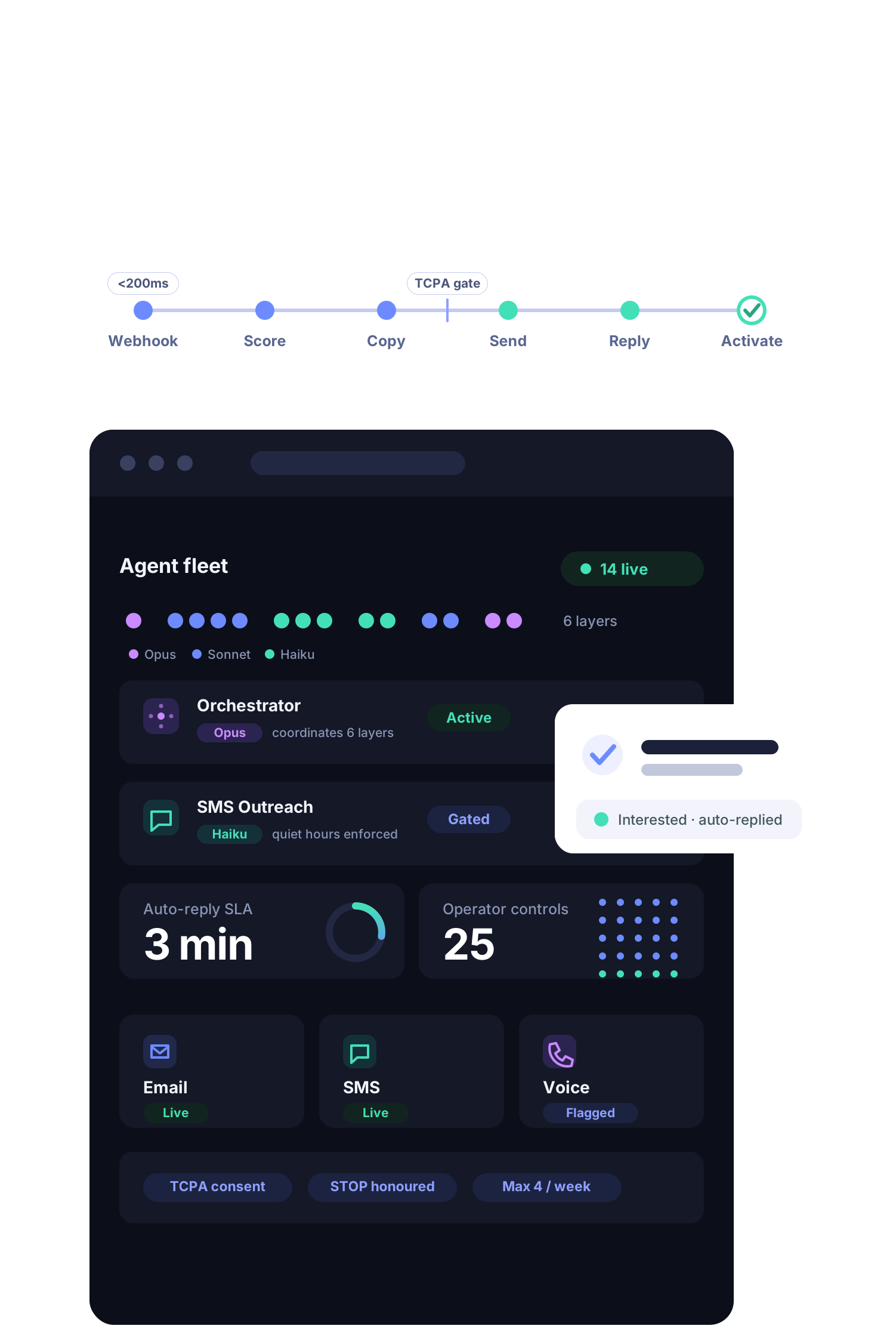
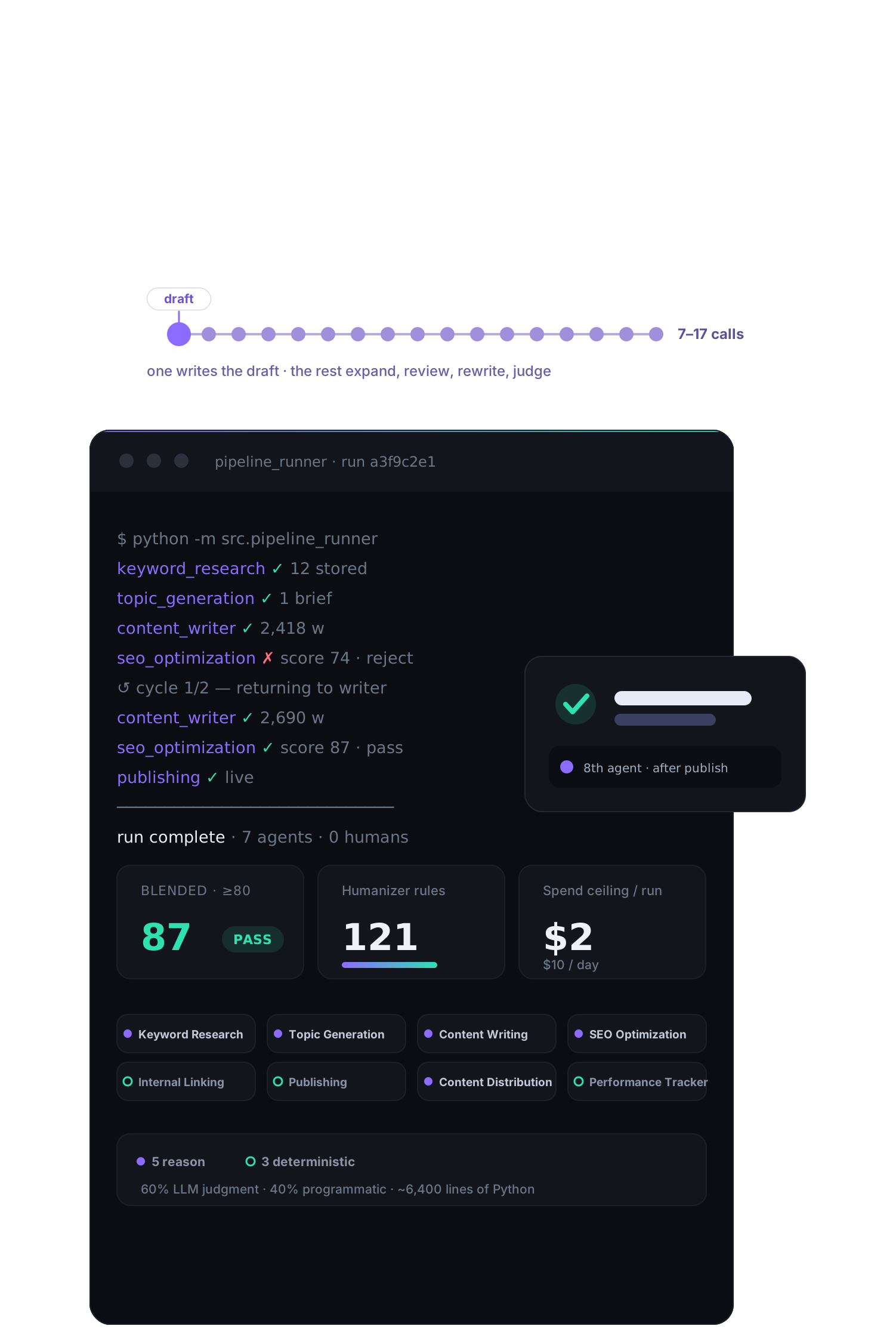
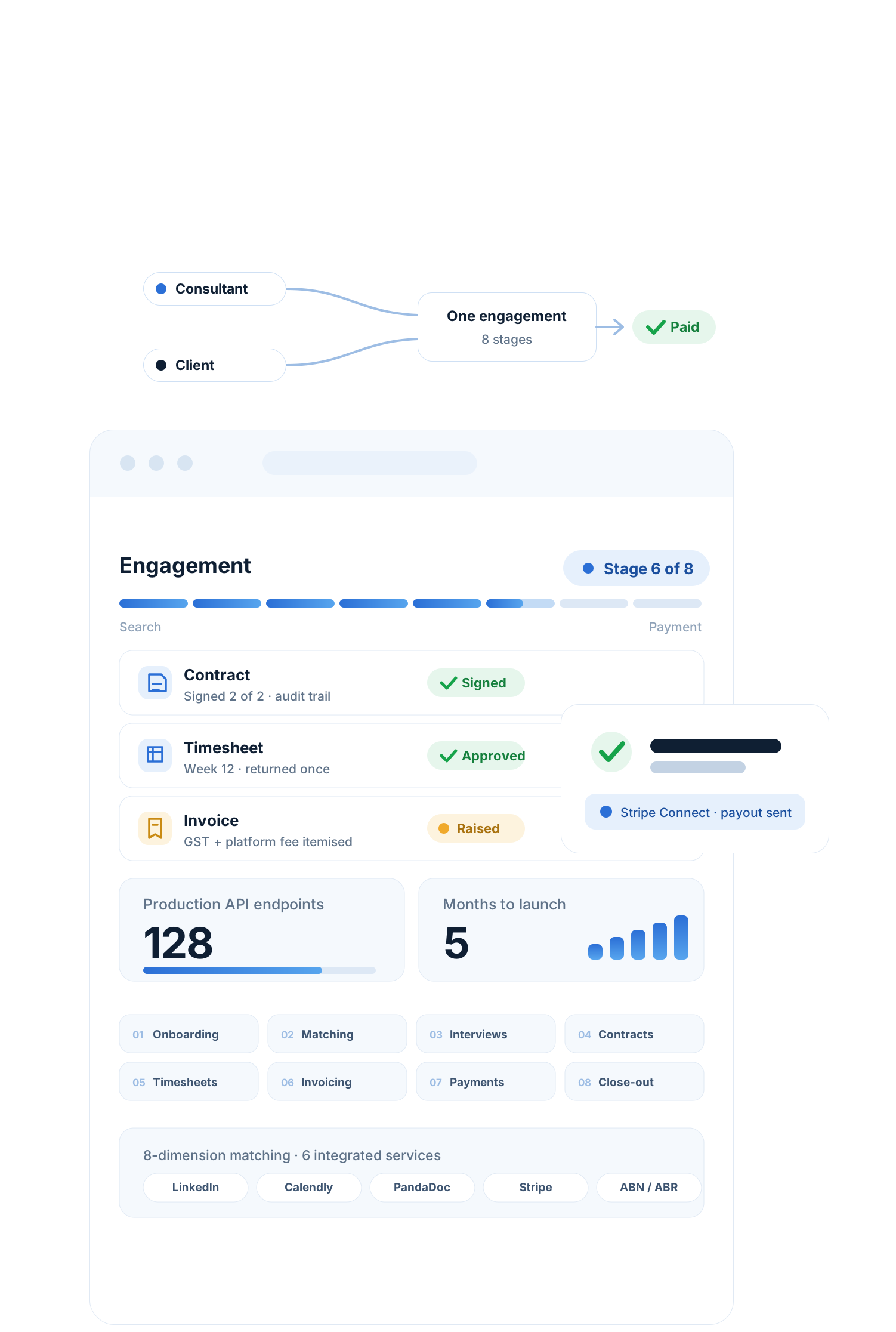
Five kinds of AI build, and what each one owns.
Custom AI Agents
Read the inputs, reason through the steps, call the tools, and stop where a person needs to sign off.
The sign-offMulti-Agent Pipelines
Split a long job across specialists that hand work down a chain, with a quality gate before anything leaves the system.
The publish barAI SaaS Platforms
Tenancy, billing, roles and the AI features themselves, built as one product rather than a model bolted onto a CRUD app.
The roadmapWorkflow Automation
The repetitive middle of a process: extract, classify, reconcile, route, and escalate whatever does not fit.
The exceptionsAI Inside an Existing Product
A feature layer on what you already run — document analysis, summaries, intelligent search — without a rewrite.
The product directionHow a build actually runs.
- 01ScopeWhat we agree before code
The workflow mapped as it really happens, the success measure written down, and the parts that are explicitly out. Five-week deliveries are only possible because this is settled first.
- 02ArchitectureThe shape before the sprint
Data model, tenancy boundaries and the tool surface, decided up front. Retrofitting isolation into a live product is the expensive kind of rework.
- 03Model layerProvider-agnostic by default
The model sits behind our own interface, so swapping or adding one is a config change rather than a refactor. FlyCRM ships exactly this way.
- 04GuardrailsWhat it may never do
Records it cannot touch, thresholds it cannot cross, and the actions that always need a person. Encoded before launch, not after an incident.
- 05ConfirmWhere a person says yes
The point the system stops and hands over. On FlyCRM that line is absolute: no record reaches the database without it.
- 06HandoverWhat you own at the end
Documentation, infrastructure access and a system your own team can extend. The build is not finished while it still needs us.
Why We Build with Claude
Three reasons, each one a failure we would rather not spend the project debugging.
Instruction-following that survives a long chain
14 agents across 6 layersA system that reads a 50-page report, extracts fields, classifies them and fires the right workflow fails at whichever step drifts first. Across the fleets on this site — 14 agents in one, 8 in another — the compounding matters more than any single-shot benchmark. Claude held the chain best in the comparisons we ran before committing.
A context window that removes the chunking layer
96% ruled out on one passWhole documents, full ticket histories and entire exports go in on one pass. That deletes the chunk-and-stitch code that is the usual source of dropped context — and the usual source of a summary that quietly omits the important paragraph.
Predictability we can put in front of a client
0 writes without a confirmEvery build here writes into someone's production system. Consistent, well-bounded behaviour is what makes a human-confirm gate meaningful and what gets a build through an internal review. It is the reason the FlyCRM figure is 0 and not 'low'.
Frequently Asked Questions.
What does an AI development company actually build?
An AI development company designs and builds software systems that use artificial intelligence to automate tasks, analyse data, and make decisions. This includes AI agents, machine learning pipelines, NLP-powered tools, SaaS platforms with AI features, and intelligent automation systems-all tailored to specific business problems.
How long does a custom AI development project take?
Timelines vary by scope. A Claude-powered MVP can typically be designed, built, and launched in 3–6 weeks. More complex AI systems-such as multi-agent workflows or full AI SaaS platforms-usually take 2–4 months depending on integrations, data requirements, and testing cycles.
What AI models and technologies do you use?
We primarily build with Anthropic's Claude as the core intelligence layer-chosen for its strong reasoning, instruction-following, and safety characteristics. We also work with OpenAI models, custom fine-tuned models, and open-source LLMs depending on the project requirements. On the infrastructure side, we use Python, Node.js, AWS, and PostgreSQL.
Do you work with startups or only large enterprises?
Both. We've worked with early-stage founders validating their first AI product and with established companies integrating AI into existing workflows. Our engagement model adapts to your stage from lean MVP builds to full-scale production systems with ongoing support.
Idea in your head? Let’s
bring it to life.
Got a project? A wild idea? Or just want to say hey?
We're here for all of it — reach out anytime.