
Handing over your dog, turned into something you can watch.
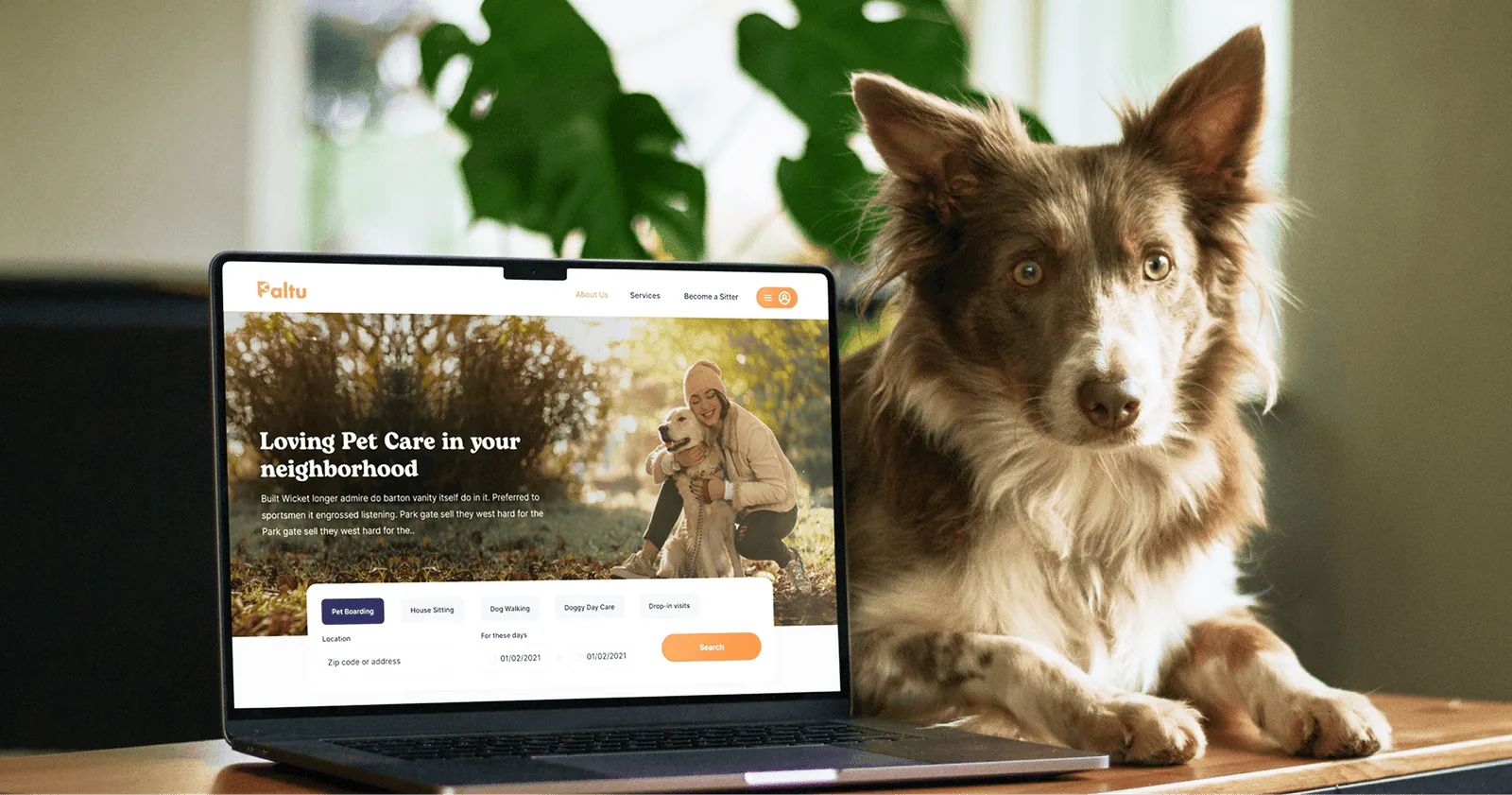
Paltu is a premium pet care platform — daycare, walks, boarding and drop-ins. In three weeks we shipped two apps on one backend: an owner app and a provider dashboard, with a Claude-powered reminder engine, live GPS walk tracking and a full booking engine behind them.
A booking app where the product is actually trust
Paltu is all about premium pet care. The platform provides a comprehensive range of services — daycare, dog walks, pet boarding, drop-in visits — and helps owners keep a constant check on care tasks and reminders. Mechanically it is a marketplace. Emotionally it is somebody handing their animal to a stranger, which is a different design problem entirely.
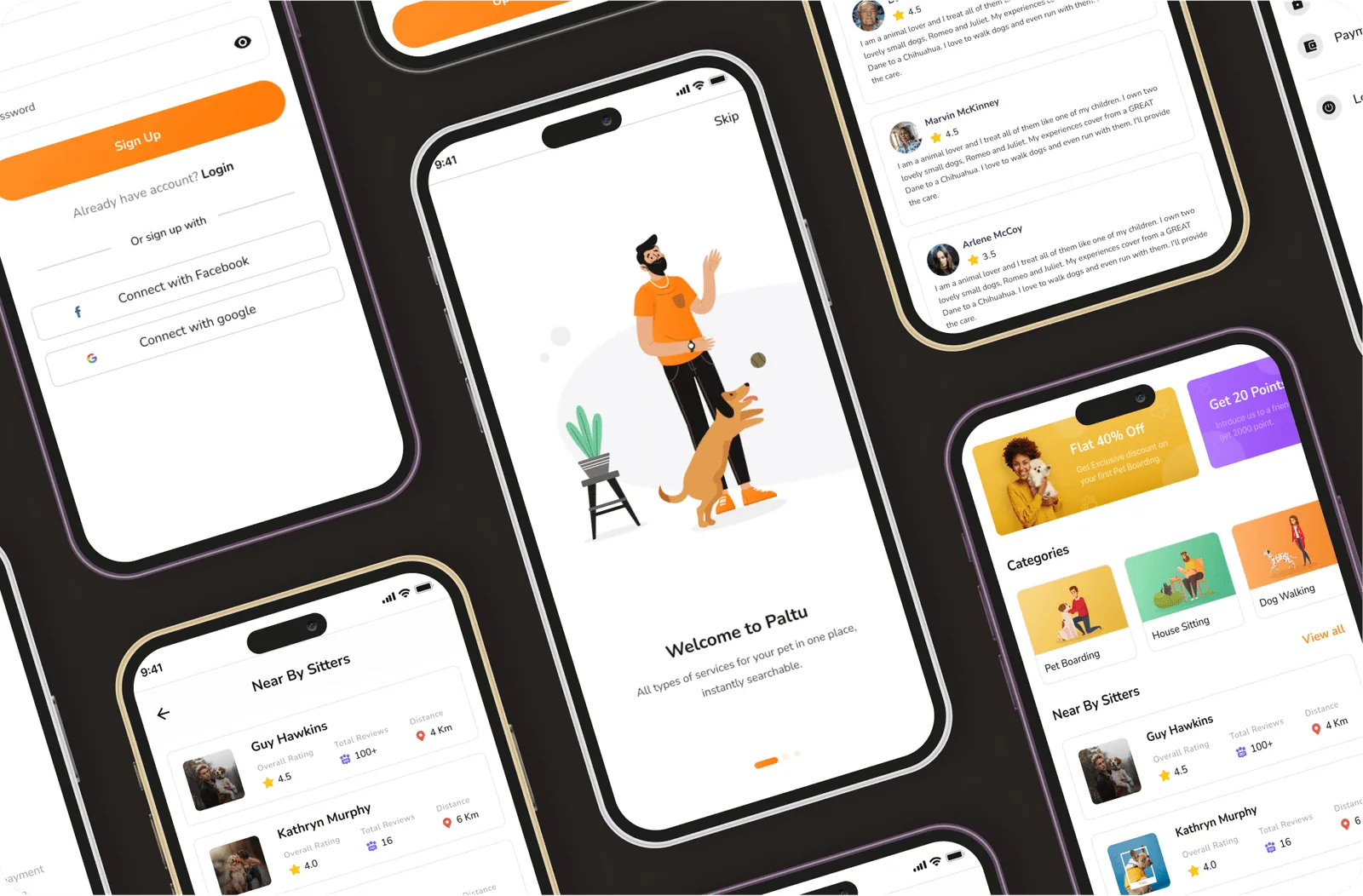
So the build is organised around visibility. Live GPS tracking makes the walk something an owner can watch rather than imagine. The provider dashboard gives the person doing the work everything they need on a phone. And a Claude-powered reminder engine handles the care tasks that quietly get missed — personalised to the pet rather than fired off a generic calendar.
Two journeys, and the place trust breaks in each
The research mapped the owner and the provider separately, because they want opposite things from the same booking. The owner wants reassurance; the provider wants to not be interrupted while working. Designing one screen for both is how pet care apps end up serving neither.
The silent hour
The walk happens and the owner hears nothing until it is over. That gap is where anxiety lives, and no amount of polish elsewhere makes up for it.
A dashboard on a phone
Providers are outdoors, one-handed, often with a dog on a lead. Anything that assumes a desk and two hands does not get used on the job.
Generic utility design
The category defaults to functional and cold. For a product people trust with a family member, looking like a parking app is a real disadvantage.
Reminders that know which animal they are about
The smart reminder engine is Claude, working from each pet’s own profile, booking history and health schedule. It generates the prompt and the reason behind it, so a notification reads as something specific to that animal rather than as a generic care-calendar ping the owner learns to dismiss.
Personal to the pet, not to the species
Reminders are generated from that animal’s own profile, booking history and health schedule — not from a generic care calendar that treats every dog the same.
Never clinical, always a prompt
The engine surfaces a task and the reason for it. It does not diagnose, and it does not tell an owner what a symptom means — that conversation belongs to a vet.
Quiet unless it earns the interruption
A pet app that notifies constantly gets muted, and a muted app misses the reminder that mattered. Context decides whether something is worth sending at all.
The restraint is what makes it work. An engine that can send anything gets muted within a fortnight, and a muted app is worse than no reminders at all — because the owner now believes they are covered.
Two audiences, one backend, one design system
The owner app and the provider dashboard are different products sharing a booking. Building them from one component library and one API is what made a two-app launch possible on a three-week calendar — the shared half got built once.
What the owner gets
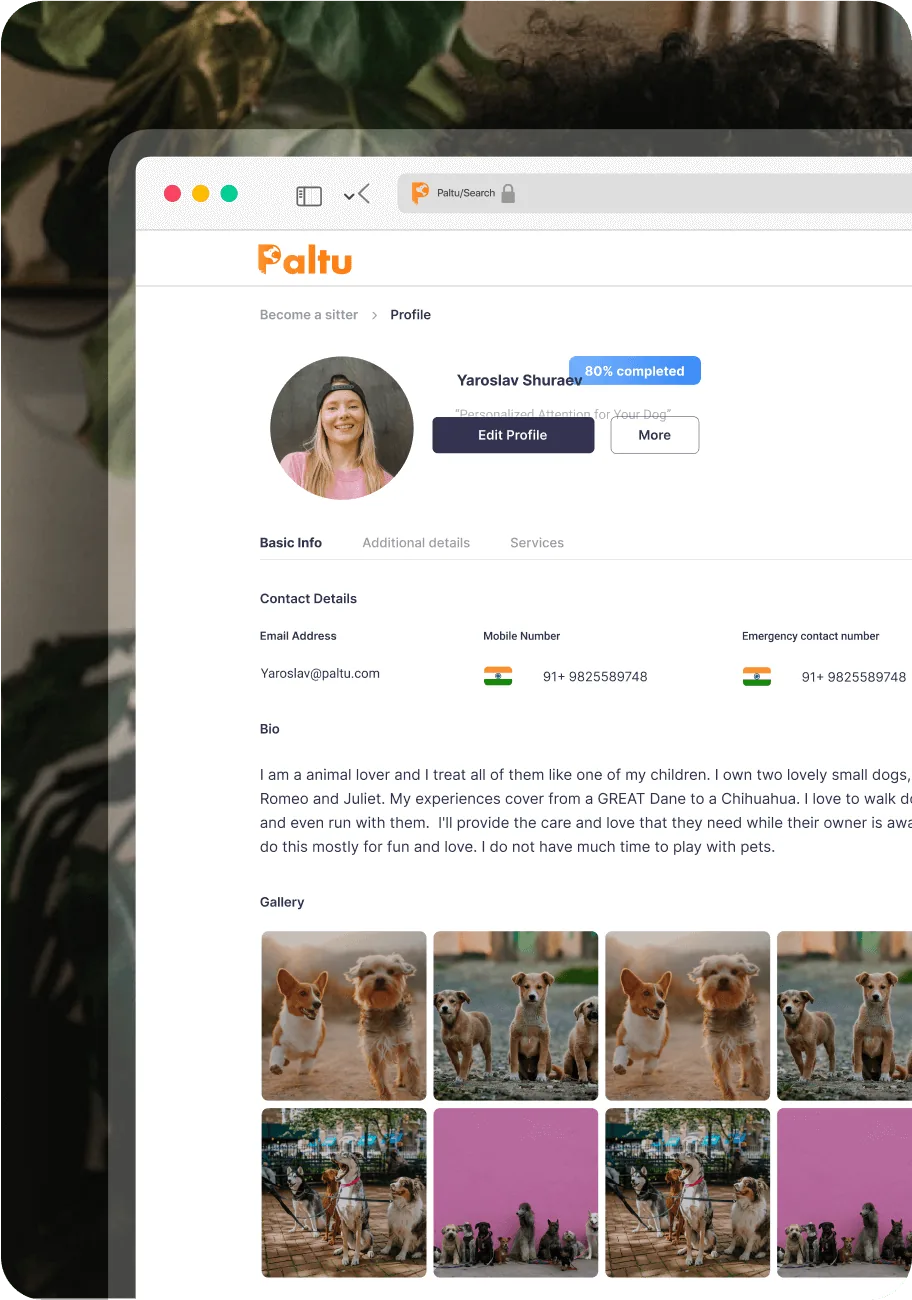
Pet profiles, service booking, live walk tracking, post-walk summaries and the reminder feed — designed to feel calm and in control rather than anxious.
What the provider gets
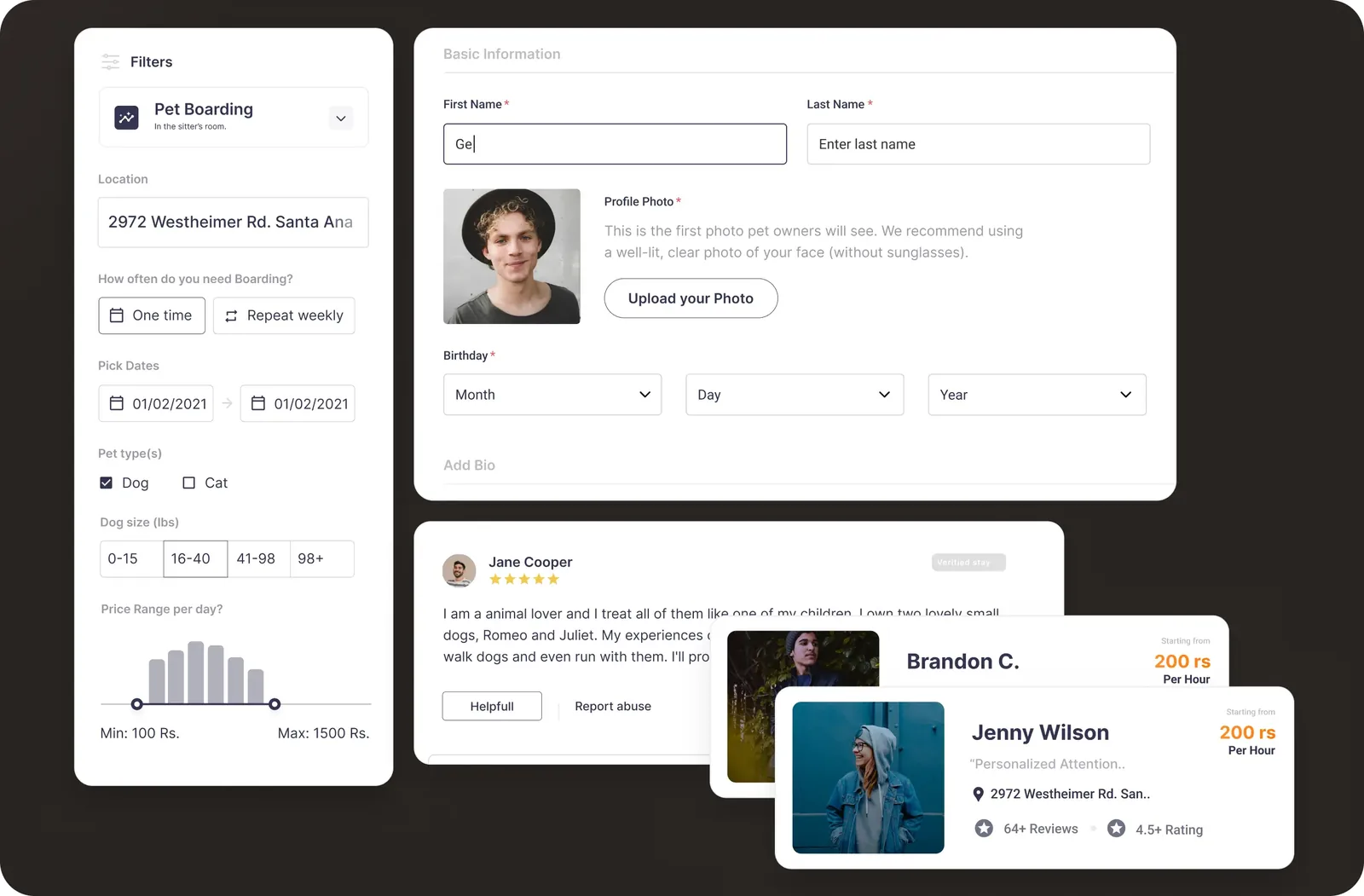
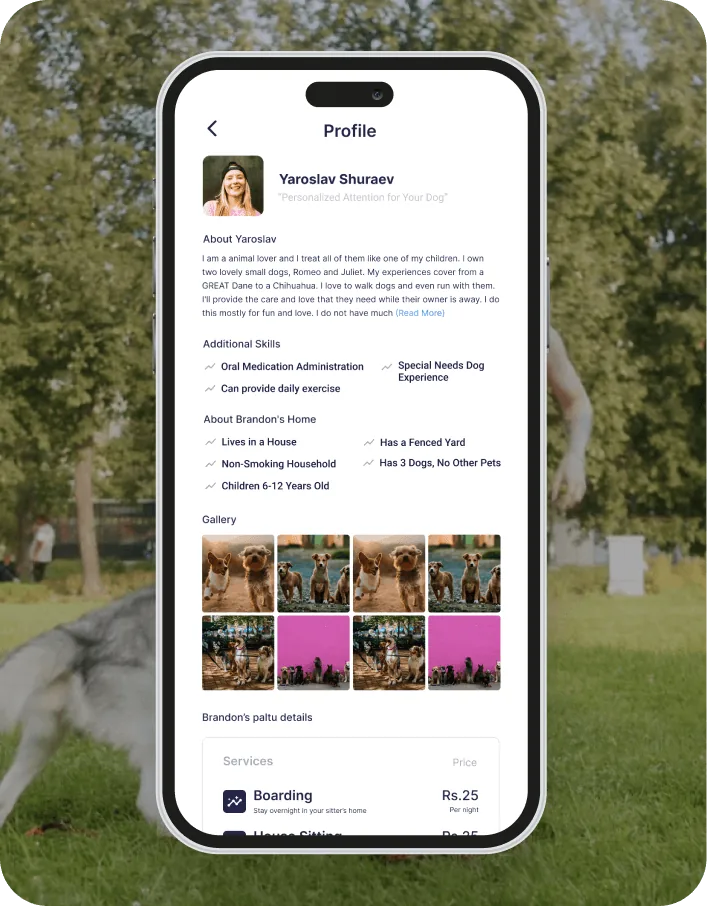
Bookings, schedule, pet health data and one-tap updates back to the owner — built for someone outdoors with one hand free.
Six workstreams, one three-week launch
Nothing here was cuttable. A pet care app without tracking is a calendar, and one without the provider side is half a marketplace — so the scope was fixed and the sequencing did the work instead.
Pet Owner Mobile App
Full-featured iOS and Android app for booking services, managing pet profiles, tracking walks in real time, and receiving AI-powered care reminders.
Service Provider Dashboard
A dedicated app for groomers, walkers, and daycare providers to manage bookings, view pet health data, send updates, and track their schedule — designed specifically for on-the-go use.
AI Smart Reminder Engine
Claude-powered notification system that generates personalised, context-aware reminders for each pet based on their profile, past bookings, and health schedule.
Booking & Scheduling Engine
Real-time availability, multi-service booking, recurring appointments, cancellation flows, and automated booking confirmations — all built into the backend from day one.
Live GPS Tracking
Real-time walk tracking with live map updates, route history, and automated post-walk summaries pushed to owners as soon as the walk completes.
Brand Identity & Design System
Complete visual identity — logo, colour tokens, typography, iconography, and a full component library used consistently across both apps and all marketing surfaces.
The features that carry the anxiety
Two systems do most of the emotional work. The booking engine handles availability, recurring appointments and cancellations so a plan can be trusted; GPS tracking handles the hour after the provider walks out the door.
Live walk tracking
Real-time map updates and route history while the walk is happening, then an automated summary pushed the moment it completes.
Booking engine
Real-time availability, multi-service and recurring appointments, cancellation flows and automated confirmations — in the backend from day one, not bolted on.
Two-way updates
Providers send photos and notes from the job in one tap; owners get them without having to ask, which is what stops the anxious mid-walk message.
Three weeks, two journeys first
Mapping both users before designing either one is what made a three-week build survivable. By the time screens started, we already knew which decisions belonged to the owner and which belonged to the provider.
Discovery & user research
We mapped two distinct user journeys — pet owners and care providers — identifying where trust breaks down, what information each user needs at each step, and where existing apps in the market were creating unnecessary friction.
Brand identity & design system
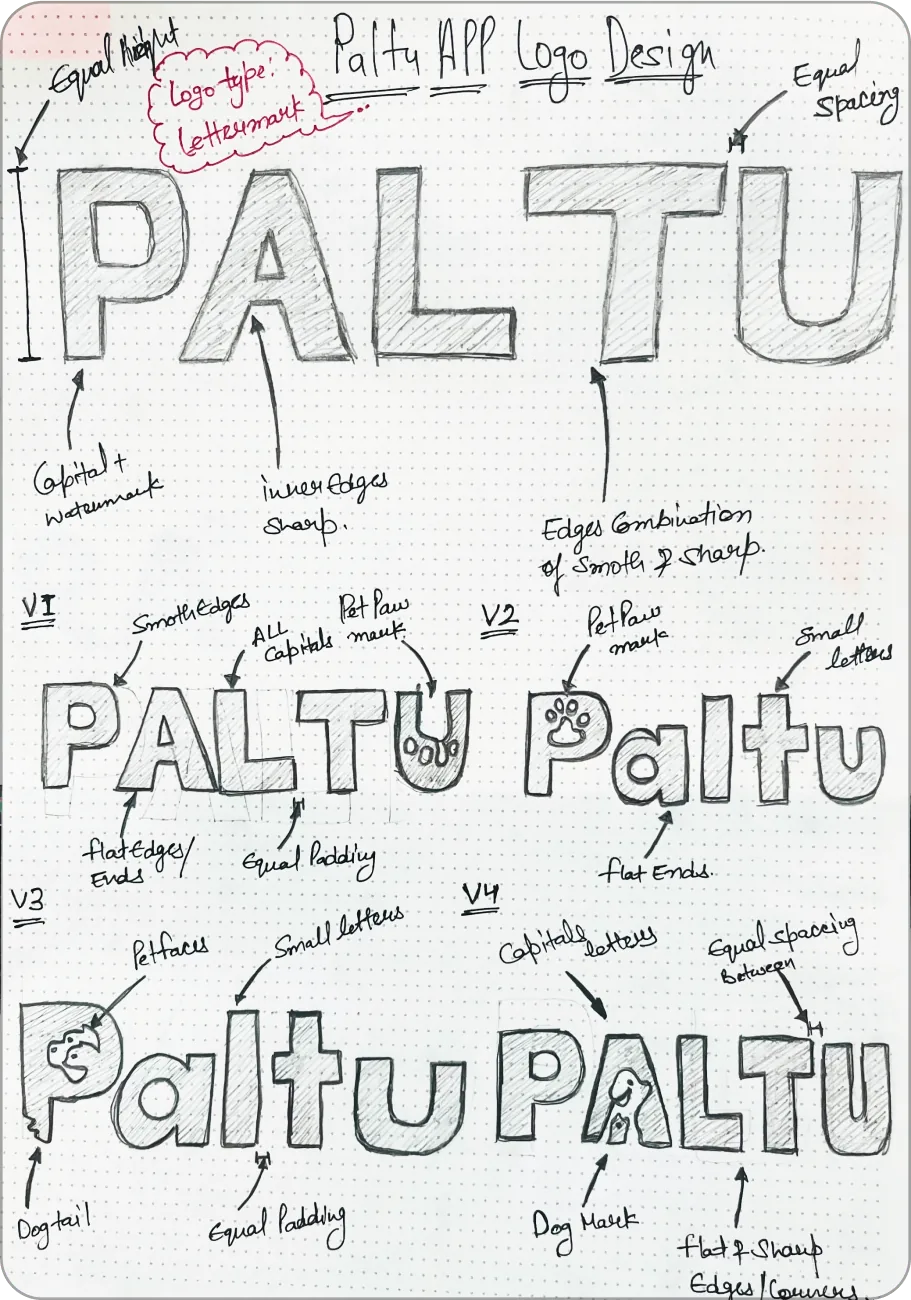
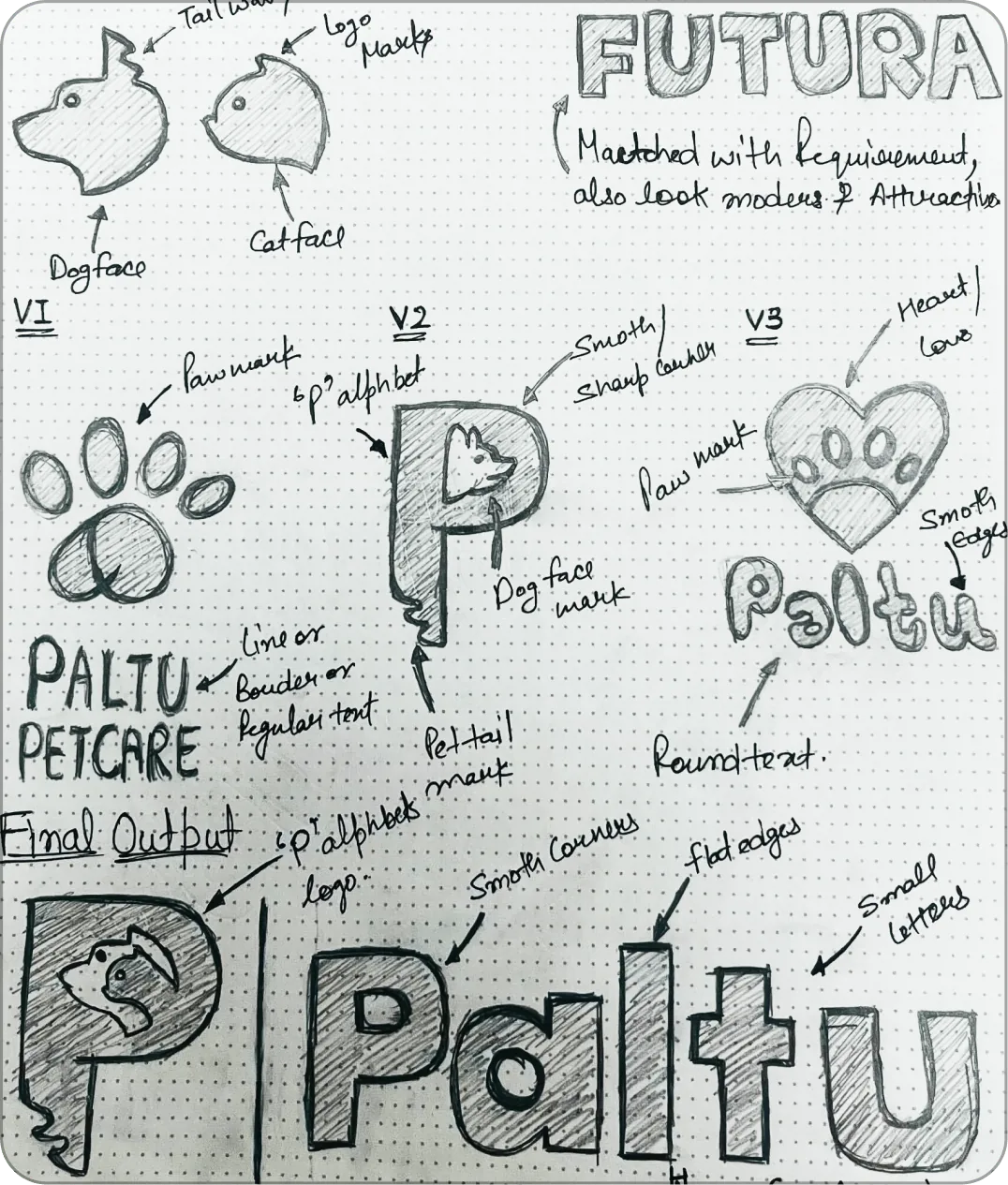
Created Paltu’s complete visual identity — a warm, premium aesthetic with a colour palette and typography that felt distinctly different from the generic utility apps dominating the pet care space.
UX design & prototyping
Full-fidelity prototypes for both the owner app and provider dashboard. Every screen was tested for emotional clarity — we wanted users to feel calm and in control, not confused or anxious about their pet’s wellbeing.
Development & launch
Shipped both iOS and Android apps simultaneously — booking engine, AI reminder system, GPS tracking, provider dashboard, and real-time notifications all built, integrated, and tested before the production release.
The anxious part became the favourite part
Paltu launched on both platforms with everything in scope. Provider onboarding went smoothly and the dashboard cut scheduling conflicts from the first week — but the clearest signal came from the reviews, where the feature people singled out was the one built to answer a worry rather than to complete a transaction.
Real-time walk tracking was the highest-rated feature in early app store reviews. Watching the route move is what turns handing over a pet from an act of faith into something you can see.
Repeat booking rate was strong from launch — owners who booked one service came back for others, which is the only signal that matters for a marketplace this size.
The AI reminders drove measurable engagement with tasks owners had previously let slip, and cut the time spent managing pet care admin.
What we took from it
Design for the worry, not the transaction. The booking flow is table stakes. Live tracking is what got reviewed, because it answers the question the owner was actually carrying.
Two apps, one shared half. A single backend and one component library is what made a two-app launch fit three weeks. Built as separate products, this is a two-month project.
An AI feature earns its notifications. Scoping the reminder engine to be personal and quiet mattered more than making it clever. The failure mode for a care app is not a bad reminder, it is being muted.

Idea in your head? Let’s
bring it to life.
Got a project? A wild idea? Or just want to say hey?
We're here for all of it — reach out anytime.